Pacific Rim prequel: Cherno Alpha Deserves a Prequel That Brings Back the Weight of the Jaegers
The Jaeger That Looked Like It Had Already Survived a War
Cherno Alpha never needed a long introduction to make an impression. The moment it appeared in Pacific Rim, it looked different from every other Jaeger in the room.
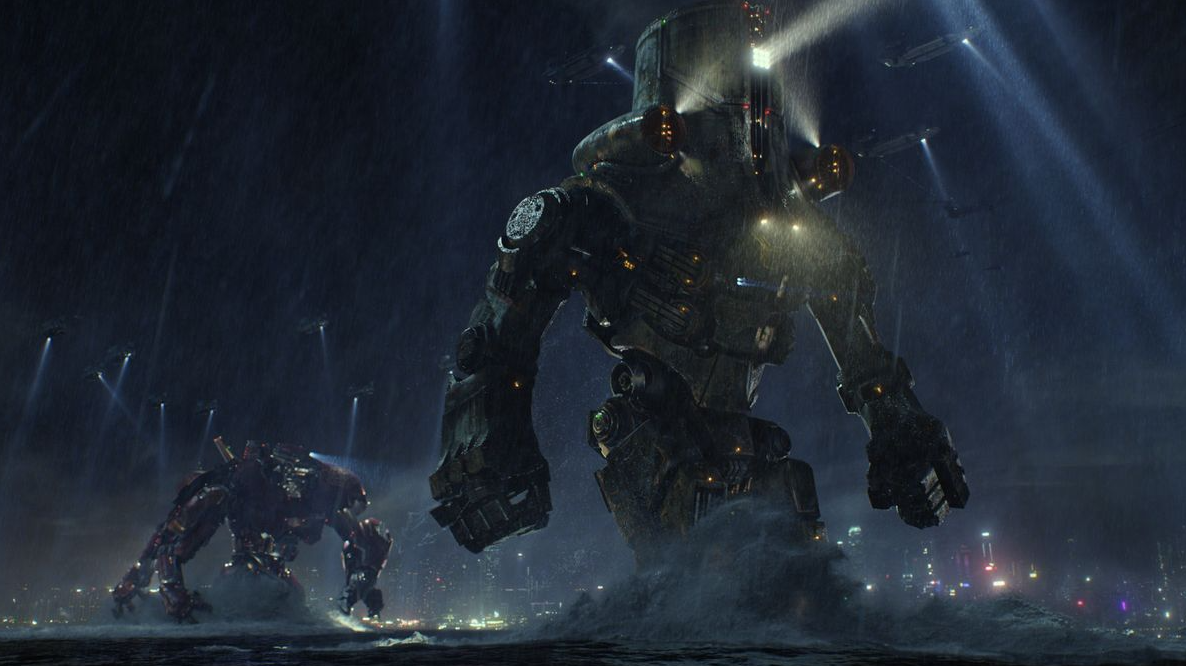
While the newer machines had more recognizable heroic silhouettes, Cherno Alpha looked like a piece of industrial infrastructure that had been forced to stand up and fight. Its enormous upper structure resembled a reactor tower. Its armor looked thick, weathered, and functional. Nothing about it seemed designed to be elegant.
That is exactly why it worked.
For me, Cherno Alpha has the best visual identity in the franchise. It does not look like a conventional robot enlarged to the size of a building. It looks like something a desperate country might actually construct during the early years of a war against giant monsters.
Every part of the design communicates age, durability, and purpose. You can almost imagine the repairs hidden beneath the armor, the systems that should have been replaced years earlier, and the engineers who kept the machine operational because humanity could not afford to retire it.
Cherno Alpha does not look new because it is not supposed to look new. It looks experienced.
That distinction is important. A machine that has survived years of Kaiju attacks should carry its history on its body. Its dents, reinforced sections, exposed mechanisms, and industrial shape should tell us something before the pilots ever speak.
Six Years Defending the Siberian Perimeter
The most interesting part of Cherno Alpha may not be what we saw in the movie, but everything that happened before it.
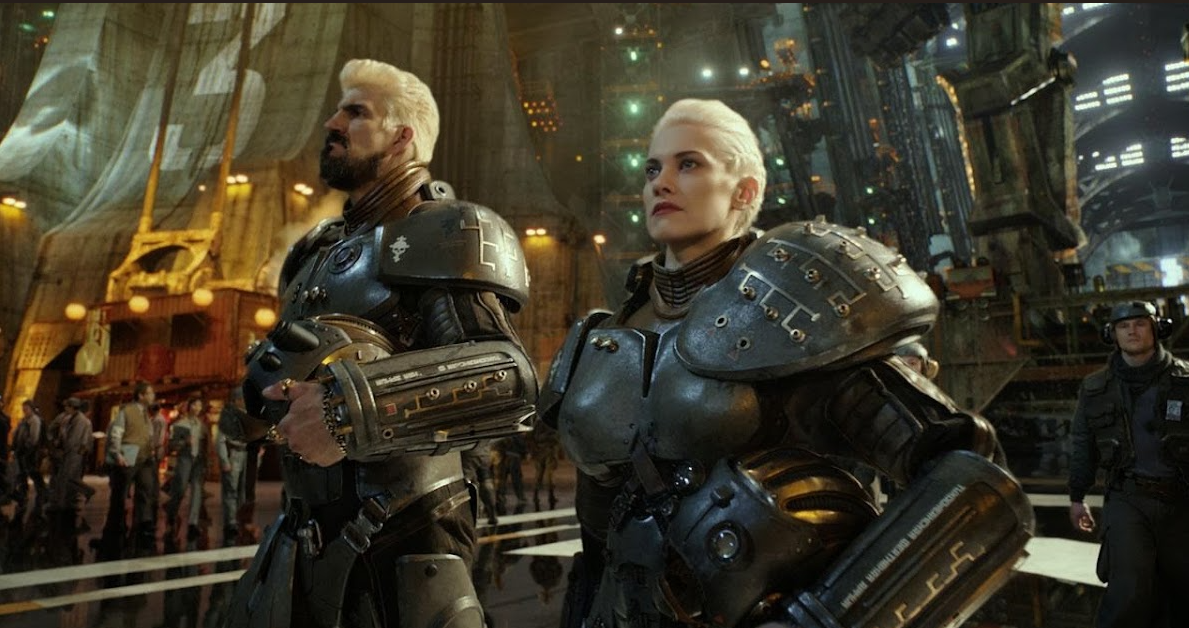
The Jaeger was piloted by Sasha and Aleksis Kaidonovsky, a married couple who reportedly defended the Siberian perimeter for six years. That single piece of background creates the foundation for an entire story.
Six years is not one heroic battle. It is a long campaign.
It means deployments in terrible weather, repeated injuries, mechanical failures, interrupted sleep, political pressure, and the constant knowledge that the next Kaiju could be the one that finally breaks through. It means watching newer Jaegers arrive while Cherno Alpha becomes increasingly outdated, but still being asked to stand between civilians and extinction.
There is something powerful about that idea. Cherno Alpha would not be the fastest or most technologically advanced machine in the story. It would survive because its pilots understand it completely. They know how it moves, where it is vulnerable, what sounds indicate a failure, and how far they can push it before the systems begin to collapse.
A prequel could show how that relationship developed. The machine and its pilots would almost become a single character, with every battle adding another layer to their shared history.
Instead of beginning with Cherno Alpha as an established legend, the story could show the moment it was first deployed. Perhaps the pilots initially distrust the primitive Mark-1 design. Perhaps the neural Drift is unstable because Sasha and Aleksis carry unresolved tension into the cockpit. Perhaps the first victory is less a clean triumph and more a desperate survival that convinces the PPDC to keep the program alive.
The audience would already know where their journey eventually ends, but that would make the story more tragic, not less meaningful.
Sasha and Aleksis Deserved More Than a Few Minutes
The Kaidonovskys are another reason this idea has so much potential.
They are not simply two interchangeable pilots inside a machine. They are a husband and wife who have to share every memory, fear, regret, and emotional wound through the Drift. That is an unusually intimate foundation for a science-fiction war story.
Most couples can hide thoughts from each other. Jaeger pilots cannot maintain that distance so easily. During the Drift, Sasha and Aleksis would experience fragments of each other’s memories, emotions, and trauma. A conflict outside the cockpit could follow them into combat, while something witnessed during the Drift could permanently change their relationship.
A story focused on them could explore the psychological cost of remaining connected for years. At what point does that level of intimacy become damaging? Can two people maintain an individual identity after repeatedly merging their minds? What happens when one pilot wants to leave the program and the other believes their duty must continue?
Those questions would give the human story the same weight as the action.
The first Pacific Rim understood that a Jaeger was not simply controlled through buttons and levers. It was controlled through trust. The pilots had to carry the machine together, both physically and emotionally. A Cherno Alpha prequel could push that idea further than either movie had time to explore.
The Wall Was More Than a Piece of Background Lore
A series or film about Cherno Alpha could also explore the years when governments began losing confidence in the Jaeger program and investing in the Anti-Kaiju Wall.
That conflict would give the story political depth. The pilots would be risking their lives to defend a system that world leaders were already preparing to abandon. Engineers would be forced to keep outdated machines operational while funding moved toward a wall that promised safety without requiring human pilots.
Cherno Alpha could become a symbol of that transition. It would represent the old strategy, a brutal machine built to meet Kaiju directly, while the wall represented the belief that humanity could simply separate itself from the threat.
The irony is that the wall never felt like a true solution. It felt like an expensive expression of fear. A Cherno-focused story could show why governments supported it, why exhausted civilians might have believed in it, and why the Rangers viewed it as a dangerous illusion.
More importantly, it could show what “defending the wall” actually meant.
Cherno Alpha would not be standing beside a structure that solved the problem. It would be the reason the structure remained standing. Every victory attributed to the wall would, in reality, belong to Sasha, Aleksis, the engineers, and the enormous machine absorbing attacks in front of it.
That could become the central emotional idea of the story. The public believes the wall protects them, but the people inside Cherno Alpha know the truth.
What Pacific Rim: Uprising Failed to Understand
A complete comparison between Pacific Rim and Pacific Rim: Uprising deserves a separate article, because there is a lot to discuss about both films. However, it is impossible to explain why a Cherno Alpha story appeals to me without addressing what I disliked about the sequel.
I hated the way Uprising handled the Jaegers.
The machines felt too light, too agile, and too similar to generic digital superheroes. They could jump, spin, and move through cities with a speed that removed much of the sense of physical danger. The designs were cleaner, but they also felt less distinctive to me.
The problem was not simply that the newer Jaegers were faster. Technology naturally evolves, and machines built years later should perform differently. The problem was that the filmmaking no longer communicated mass in the same convincing way.
In the first Pacific Rim, a Jaeger taking one step felt like an event. The ground reacted. Water moved. Buildings provided scale. The camera often struggled to contain the machine, which made it feel as though a real observer was trying to record something impossibly large.
When a Jaeger was hit, the impact travelled through its entire body. The pilots were thrown across the Conn-Pod. Metal bent. Systems failed. Every movement appeared to require enormous mechanical effort.
That sensation was part of the story. The Jaegers were not people wearing metallic costumes. They were thousands of tons of machinery being forced to move through a fragile human connection.
Uprising retained the concept of giant robots, but for me, it lost much of that physical language. The Jaegers became more polished and technically impressive while feeling less real. They moved quickly, but their speed came at the cost of presence.
Cherno Alpha represents the opposite philosophy. It is slow, heavy, imperfect, and full of character. A story focused on it would be the ideal opportunity to recover what the sequel left behind.
Bringing Back the Essence of the First Pacific Rim
A Cherno Alpha production should not try to imitate the first movie only through color grading or references. It would need to understand the principles behind the original visual style.
The camera should remain close to human perspective whenever possible. Jaegers should be framed beside cranes, ships, apartment buildings, mountains, and industrial structures that give the audience a reliable sense of scale. Their movements should disturb the environment even when they are not fighting.
Snow should fall from buildings when Cherno Alpha passes nearby. Frozen ground should crack beneath its feet. Steam should pour from damaged systems. Each punch should look as though several thousand tons of machinery are being driven into another massive body.
The sound design would be equally important. Cherno Alpha should not sound smooth or futuristic. Its joints should grind. Its reactor should vibrate through the landscape. The pilots should hear metal straining around them during every battle.
That mechanical imperfection would create tension before a Kaiju even appears. The audience should never be completely certain that Cherno Alpha will survive the next deployment, not because the pilots are unskilled, but because the machine is being pushed beyond the lifespan its designers originally imagined.
This approach would also distinguish the project from other giant-robot franchises. Pacific Rim does not need to compete by making its Jaegers faster. It needs to make them feel larger, more dangerous, and more difficult to control than anything else on screen.
What a Cherno Alpha Story Could Look Like
The ideal version would probably be a limited live-action series rather than a single movie.
A film might have enough time for one major operation, but a series could show the gradual cost of defending the perimeter over several years. Each episode could revolve around a new deployment while advancing the larger story of the Kaiju War, the failing Jaeger program, and the construction of the wall.
The action would still matter, but the series should not become a weekly sequence of interchangeable monsters. Every encounter should change something.
One battle might permanently damage Cherno Alpha’s arm, forcing engineers to replace it with an improvised system. Another could expose a weakness in the wall and create political conflict between the PPDC and local authorities. A mission in an isolated coastal region could show the civilian cost of a victory that looks successful in official reports.
The Kaiju should also have distinct behavior. Some could attack directly, while others test defensive patterns, avoid Cherno Alpha, or deliberately target infrastructure. That would reinforce the idea that the attacks are part of an evolving war rather than random disasters.
At the center of everything would be Sasha and Aleksis. Their marriage, their connection through the Drift, and their growing understanding of Cherno Alpha would give the larger conflict a human foundation.
The final chapter would not need to recreate the events of the first film. It could end shortly before Cherno Alpha is transferred to Hong Kong, with the machine leaving Siberia after six years of service. The audience would know what waits for them, but the story could still end on a moment of earned pride.
They held the line.
Not because the wall was strong, but because they were there.
The Announced Prequel Series Creates a Real Opportunity
The fact that a live-action Pacific Rim origin series is currently in development makes this idea feel more relevant than a simple fan request.
No official story details have confirmed that Cherno Alpha, the Kaidonovskys, or the Siberian perimeter will be involved. The series could focus on the opening of the Breach, the creation of the first Jaegers, Stacker Pentecost, or an entirely new group of characters.
Still, a prequel is the perfect format for revisiting the era when the Jaegers felt experimental, dangerous, and deeply connected to the cultures that built them.
Even if Cherno Alpha is not the main subject, the new production should learn from what made its design memorable. Every Jaeger should look like the product of a specific country, engineering philosophy, economic reality, and stage of the war. They should not feel like variations of the same sleek template.
Cherno Alpha looked Russian before anyone explained where it came from. It carried the visual language of tanks, reactors, heavy industry, and military endurance. That is the level of identity the franchise needs to recover.
A Legend Worth Exploring
Cherno Alpha was given relatively little screen time, but it left a stronger impression on me than many machines that received far more attention.
Its appearance implied a much larger story. It suggested years of battles, repairs, sacrifices, and victories that happened before the main characters arrived in Hong Kong. It looked like a veteran in a world that was already preparing to replace it.
That is why I would love to see a project focused on its history.
It would not need to rewrite the ending or pretend the audience does not know the future. The value would come from understanding what Cherno Alpha represented before its final battle. It was not simply an old machine waiting to be destroyed. It was one of the reasons humanity survived long enough to reach the events of the first film.
A well-made prequel could restore the scale, atmosphere, and physical impact that defined Guillermo del Toro’s Pacific Rim. It could remind audiences that the Jaegers were more than colorful robots. They were national monuments, moving fortresses, and mechanical extensions of the damaged people inside them.
Cherno Alpha already has the design, the pilots, the history, and the emotional foundation.
All it needs is a story willing to give that background the weight it deserves.
Would you like to see a Pacific Rim prequel focused on Cherno Alpha?
MARKED AS: Movie | Comic book
COMMENTS
Want to join the conversation? Log in to leave a comment.