Power Rangers Time Force Review: Has the Era of Mature Power Rangers Stories Already Passed?
A Power Rangers Season That Expected More From Its Audience
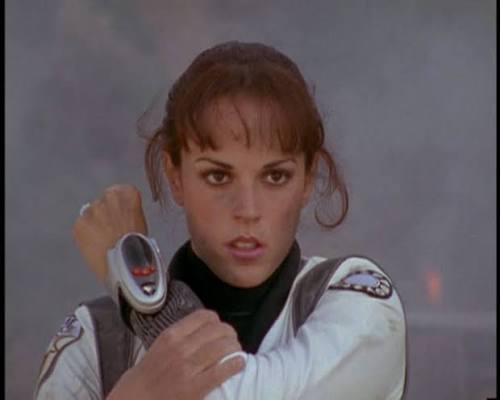
Power Rangers has always been associated with bright costumes, transformation sequences, monsters, and giant battles. Time Force included all of those things, but it also trusted its audience with themes that were surprisingly serious.
The story begins with loss. Jen Scotts watches Alex, her fiancé and the original Red Time Force Ranger, apparently die while trying to stop Ransik. She does not travel to the past because she is looking for adventure. She is driven by grief, anger, duty, and a desire for justice that sometimes comes dangerously close to revenge.
That immediately gives the season a different emotional foundation. Jen is not simply the responsible member of the team. She is someone trying to remain in control while carrying a personal wound that influences the way she sees Wes, Ransik, and even the mission itself.
For a children’s action series, that was an unusually strong place to begin.
Wes Was More Than the Typical Red Ranger
Wes Collins initially appears to have everything. He comes from a wealthy family, lives comfortably, and has a future already planned by his father. But he has very little control over what that future will actually look like.
His journey is not only about becoming heroic. It is about choosing who he wants to be instead of accepting the identity that has been prepared for him. Becoming the Red Ranger gives him purpose, but it also forces him to recognize how protected his life has been.
His relationship with Jen strengthens that conflict. She comes from a future where duty and discipline shape almost every part of her life. Wes represents freedom, improvisation, and the possibility that destiny is not permanent. Their relationship develops gradually, and the emotional distance between them gives the story a maturity that Power Rangers did not always attempt.
The romance works because it is connected to the central theme of the season. Jen comes from a world where the future is treated as something recorded and predictable. Wes teaches her that people can make choices that change what is supposed to happen.
Eric Brought Class Conflict Into the Team
Eric Myers is another reason Time Force feels more complex than a typical season. He and Wes knew each other before becoming Rangers, but they came from completely different social realities.
Wes was born into privilege. Eric had to fight for every opportunity and developed a deep resentment toward people who seemed to receive everything without earning it. When he becomes the Quantum Ranger, the power does not automatically turn him into a traditional hero. It gives him the chance to prove that he no longer needs anyone else.
That makes his conflict with Wes more interesting than a simple rivalry between two Red Rangers. Eric is not jealous only because Wes has friends or status. He sees Wes as a symbol of a world that has always favored certain people while forcing others to struggle.
His anger is often unhealthy, but it is understandable. Time Force allows him to be difficult, proud, isolated, and still capable of growth. He does not become a different person overnight. His development happens slowly, through conflict and reluctant cooperation.
That kind of character arc gave the series a sense of emotional continuity that many weekly children’s programs lacked.
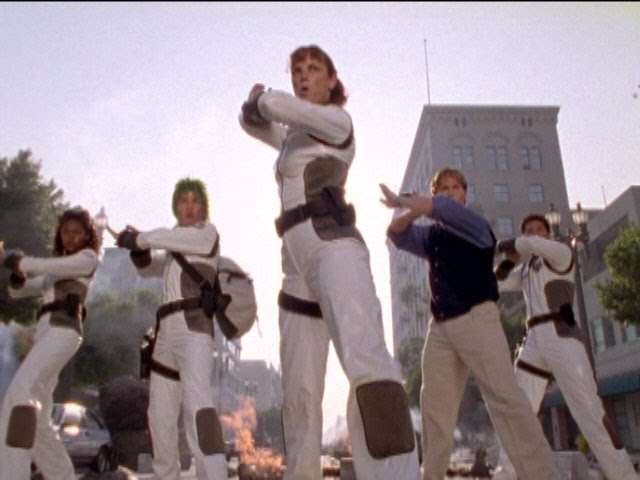
Ransik Was a Villain Created by Prejudice
Ransik is one of the strongest villains in Power Rangers because his hatred did not begin in a vacuum. He comes from a future society where mutants are feared, rejected, and treated as inferior simply because of how they were born.
This does not excuse what he does. Ransik becomes violent, cruel, and willing to hurt innocent people. But the series makes an important distinction between explaining someone’s anger and justifying their actions.
He represents what can happen when discrimination, humiliation, and resentment are allowed to grow without limit. His war against humanity is wrong, but the society that helped create him is not presented as completely innocent either.
Frax makes that theme even darker. Once a human scientist named Dr. Ferricks, he saves Ransik’s life and is repaid with betrayal. His transformation into Frax turns him into someone consumed by revenge, showing how victims can become destructive when their pain becomes their entire identity.
Even Nadira changes after being forced to confront the consequences of her father’s hatred. Her development helps push Ransik toward a moment of self-awareness that feels earned because it is connected to the people closest to him.
For a show marketed to children, Time Force was dealing with a remarkably adult idea: people can be shaped by injustice and still remain responsible for what they choose to become.
The Future Was Not Presented as Perfect
One of the most interesting choices in Time Force is that the future is technologically advanced, but not necessarily morally superior.
Time Force is presented as an organized law enforcement agency, yet its society still contains prejudice, rigid systems, social divisions, and an obsession with controlling events. The future has better technology, but it has not solved human fear or inequality.
That makes the time travel concept more meaningful. The Rangers do not simply come from a perfect future to save a primitive past. They gradually learn from the people living in the year 2001. Wes changes them because he refuses to accept that history must happen exactly as recorded.
This creates one of the season’s strongest dilemmas. If the future is already known, should people accept it? If changing history might create unexpected consequences, is it still right to try?
Time Force repeatedly suggests that destiny should not become an excuse for surrender. The future may contain possibilities, predictions, and recorded events, but people still have the responsibility to choose how they respond.
Why a Modern Time Force Could Work
A new version of Time Force could work extremely well as a modern streaming series. The central concepts are still relevant: prejudice, class inequality, surveillance, genetic discrimination, the militarization of technology, and the fear that institutions may care more about preserving order than protecting individuals.
The original series explored those ideas within the limitations of children’s television. A new adaptation could go further without becoming unnecessarily dark or cynical. It could give Jen more time to process grief, explore the politics of the future, deepen Eric’s resentment toward Wes, and make Ransik’s transformation from victim to extremist even more emotionally complicated.
The visual side also has enormous potential. The future of Time Force could be redesigned as a beautiful but highly controlled society, where technology has advanced faster than compassion. The time travel elements could create larger mysteries, and the consequences of changing history could become more important across the season.
The goal should not be to remove the optimism, teamwork, or colorful identity of Power Rangers. Those things are essential. The challenge would be combining them with more sophisticated writing and modern production values.
Has This Type of Television Disappeared?
The original format probably would not work exactly the same way today. Long seasons with dozens of episodes, repeated transformation sequences, weekly monsters, and extensive reused footage belong to a different television economy.
But that does not mean the idea behind Time Force has expired.
Audiences still watch superhero stories, science fiction, time travel dramas, team-based adventures, and shows about young people carrying responsibilities much larger than themselves. What has changed is the expectation around pacing, visual quality, continuity, and character development.
A modern audience might not want forty episodes following the same formula. But they could absolutely watch eight or ten focused episodes with a continuing story, strong action, complex relationships, and a clear emotional arc.
The era of the old production model may have passed. The era of Power Rangers stories does not necessarily have to pass with it.
Power Rangers Needs to Grow Without Becoming Ashamed of Itself
One of the biggest challenges for any Power Rangers reboot is tone. The franchise has sometimes struggled between being too childish for older viewers and becoming embarrassed by the colorful world that made it popular.
A successful new version should not treat the suits, Zords, transformations, or martial arts as problems that need to be hidden. It should treat them seriously without pretending they are realistic.
Time Force is probably one of the best seasons to use as inspiration because it already understood that balance. It could tell an emotional story about grief or prejudice and still end with a giant robot battle. The dramatic themes did not erase the fun. They gave the action more meaning.
That is the lesson a modern adaptation should follow. Growing up does not mean removing imagination. It means giving the imagination stronger characters, real consequences, and ideas worth discussing.
A Story Worth Revisiting
Personally, I would love to see Time Force return. Not necessarily as a direct continuation with the original cast, although seeing those characters again could be meaningful. I would also be interested in a complete reinterpretation that preserves the central ideas while creating a new timeline, new consequences, and a more detailed vision of the future.
Time Force demonstrated that Power Rangers could speak to children while giving older viewers something real to think about. It showed that a colorful superhero program could explore grief, prejudice, class conflict, revenge, romance, and personal choice without losing its sense of adventure.
Perhaps the exact era that produced Time Force is gone. Television has changed, audiences have changed, and the franchise itself is searching for a new direction.
But I do not believe the desire for this kind of story has disappeared. A thoughtful new adaptation could prove that Power Rangers does not belong only to nostalgia. It could still become something meaningful for another generation.
The real question is whether the franchise is willing to grow without forgetting what made it special.
Would you watch a new version of Power Rangers Time Force, or has the era of this type of series already passed?
MARKED AS: Tv Show
COMMENTS
Want to join the conversation? Log in to leave a comment.