The Sphere 1998 Deserved a Prequel, but Should Its Greatest Mystery Be Explained?
A Discovery That Feels Bigger Than the Movie
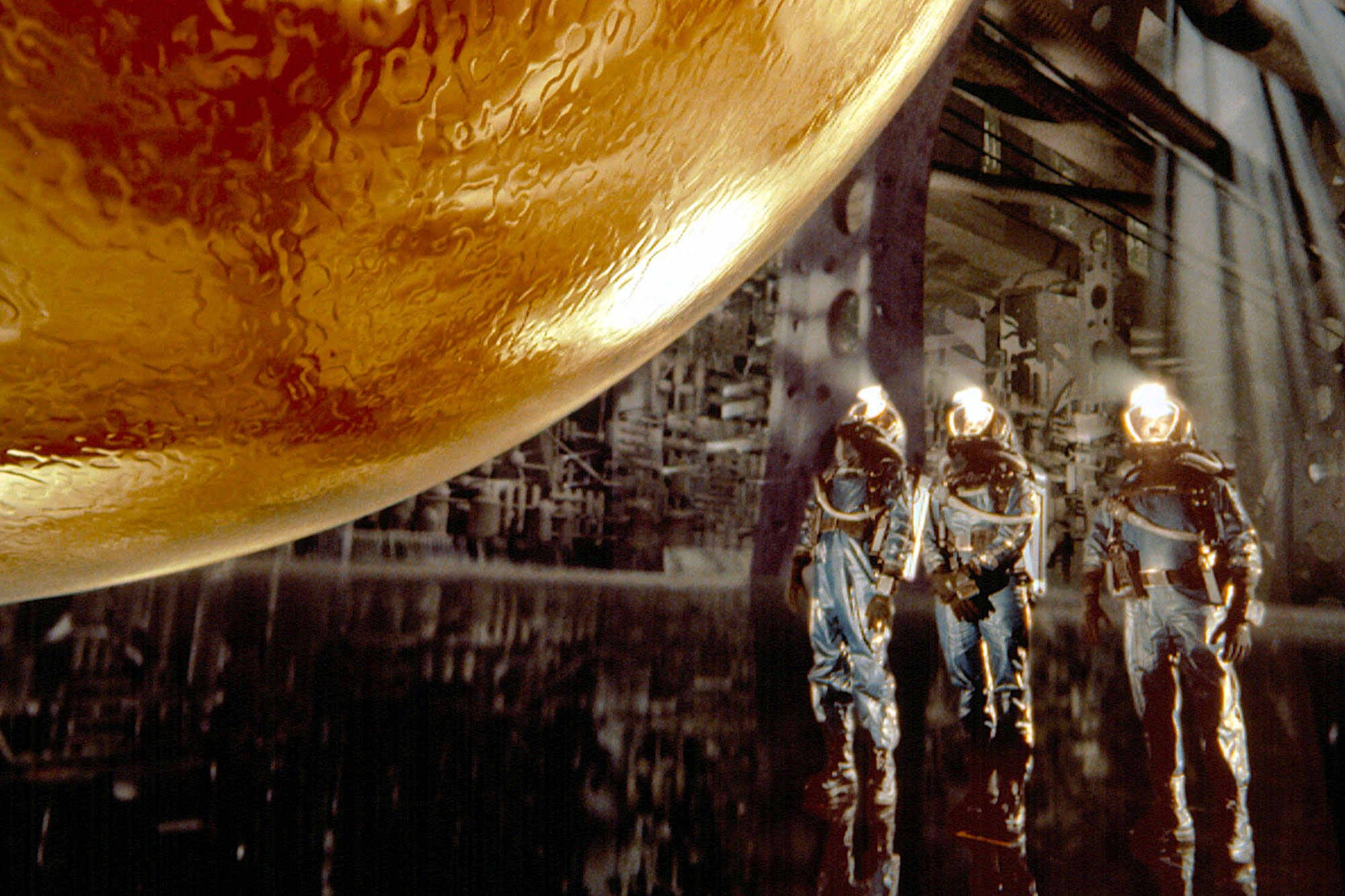
Sphere begins with the kind of premise that could support an entire science-fiction franchise. A massive spacecraft has been discovered at the bottom of the Pacific Ocean, buried beneath centuries of coral and apparently untouched by the pressure of the deep sea.
A group of specialists is sent to investigate what initially appears to be evidence of extraterrestrial contact. However, the mystery becomes even stranger when they discover that the vessel is not alien. It is an American spacecraft from the future that somehow travelled back through time and remained hidden beneath the ocean for roughly three hundred years.
That revelation raises an enormous number of questions. Who built the ship? What was its original mission? How far into the future did it come from? What exactly happened when it encountered the sphere? And why did a crew advanced enough to travel through space fail to control what they brought aboard?
The movie gives us enough information to understand the immediate story, but it leaves most of the larger mythology untouched. The scientists find the ship, enter the sphere, experience its power, and eventually make a decision that closes their personal journey. From that perspective, the film is complete.
But the universe surrounding their experience feels anything but complete.
Where Did the Sphere Actually Come From?
The spacecraft may be human, but the sphere remains the real unknown.
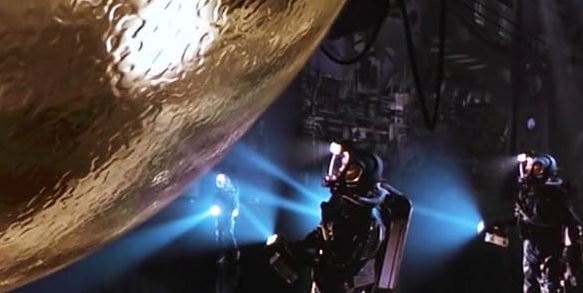
It appears perfectly smooth, seemingly impossible to open through conventional means, and capable of giving people the power to transform their thoughts into physical reality. The object does not simply read conscious desires. It reaches into fears, memories, insecurities, dreams, and impulses that people may not even understand themselves.
That creates the most interesting mystery in the story. Was the sphere built by an alien civilization? Was it discovered somewhere beyond known space? Is it a machine, a living intelligence, or something humans do not have the language to define?
A prequel could explore the future expedition that originally encountered it. We could follow the crew of the spacecraft as they discover the sphere in deep space, decide to bring it aboard, and gradually realize that their own minds have become the greatest danger on the ship.
The story could end with the unknown event that sends the vessel through time and into the Pacific Ocean. That would connect directly to the opening of the original film while allowing a new group of characters to experience the sphere’s influence in a completely different environment.
Instead of an isolated underwater habitat, the prequel could take place inside a futuristic spacecraft with nowhere to escape. The crew might begin manifesting fears connected to space, technology, isolation, or the possibility that they are no longer in control of their own mission.
There is enough material there for a tense psychological science-fiction film.
The Danger of Answering Every Question
As much as I would like to know more about the sphere, there is also a strong argument against explaining it.
Some objects become less interesting once the mystery is removed. The sphere is frightening precisely because neither the characters nor the audience can fully understand it. We know what it can do, but we do not know why it does it, who created it, or whether it has any purpose at all.
Perhaps it does not judge people or deliberately attack them. It may simply give them access to a power they are emotionally incapable of controlling.
Explaining its creators, technology, and original purpose could turn a disturbing cosmic mystery into ordinary franchise mythology. The sphere might become another alien device with a detailed origin, a list of rules, and an exposition-heavy history. Once that happens, the audience may stop fearing it.
The unknown allows us to project our own ideas onto the object, which is perfectly appropriate for a story about the power of imagination. In a sense, the audience reacts to the sphere in the same way the characters do. We want it to have an explanation because uncertainty makes us uncomfortable.
Maybe refusing to explain it is part of the point.
Our Minds Are the Real Monsters
For me, one of the best aspects of Sphere is the way it shows how primitive fears can overpower intelligence and logic.
The people sent to investigate the spacecraft are experts. They are scientists, mathematicians, military professionals, and psychologists. They are supposedly the kind of people humanity would trust during a first-contact event.
But knowledge does not protect them from their own subconscious.
Once the sphere gives them the ability to manifest thoughts, their fears begin to shape the environment around them. The danger does not come from a traditional monster deliberately hunting the group. It comes from emotions they cannot control and thoughts they may not even know they are having.
That is what makes the concept so effective. Human beings like to imagine that, if given extraordinary power, they would create something beautiful or improve the world. Sphere offers a darker possibility. Before we could consciously build anything, our buried fears might create something terrible.
Fear of the ocean becomes a physical threat. Suspicion turns allies against one another. Repressed anger becomes destruction. Personal insecurities grow until they begin controlling the entire situation.
The characters are intelligent enough to understand the theory, but understanding fear is not the same as controlling it.
A Psychological Horror Story Disguised as Science Fiction
Sphere is often remembered as an underwater science-fiction thriller, but its most important conflict is psychological.
The deep-sea setting works because it removes every sense of safety. The characters are surrounded by darkness, enormous pressure, unfamiliar sounds, and miles of ocean. Even before the manifestations begin, the environment already feels hostile.
The sphere then turns that isolation into something more personal. Every character carries emotional wounds and private fears into the habitat. Once imagination becomes reality, those internal problems can no longer remain hidden.
This is why the movie is more interesting than a simple story about scientists discovering alien technology. The object does not introduce an outside enemy. It exposes what was already inside them.
For me, that is the film’s most powerful idea. Humanity may spend centuries preparing to meet extraterrestrial life, but the greatest risk could still be our inability to understand ourselves.
What a Sphere Prequel Could Explore
A successful prequel should not attempt to explain every detail. It should expand the story while preserving the object’s mystery.
The plot could follow the future crew before they discover the sphere. We would learn about their mission, personal relationships, internal conflicts, and the advanced society they come from. Their technology might be far beyond ours, but emotionally they would still be recognizably human.
After encountering the sphere, small manifestations could begin appearing aboard the vessel. At first, the crew might interpret them as technical failures, hallucinations, or evidence of an alien presence. Gradually, they would realize that the ship is responding to their thoughts.
Different fears would create different kinds of danger. A pilot frightened of becoming lost could distort the ship’s navigation. A scientist obsessed with discovering alien life could unknowingly create evidence of a hostile organism. A crew member terrified of betrayal could begin manifesting events that make everyone suspicious of one another.
The final act could show the crew losing control as their combined fears reshape the vessel. The resulting disaster might send the ship through a black hole or another unknown phenomenon, carrying both the spacecraft and the sphere into Earth’s past.
The prequel would answer how the ship reached the ocean without necessarily revealing where the sphere was created or what intelligence, if any, exists behind it.
That balance would be essential.
A Sequel Might Be Even More Difficult
A direct sequel would be harder to justify because the survivors make a deliberate choice at the end of the original story. Their decision brings emotional closure and protects humanity from a power it is not ready to possess.
Continuing immediately after that ending could weaken the importance of what they chose to do. It would require someone to recover the memories, rediscover the sphere, or reveal that their attempt to forget was unsuccessful.
A sequel could still work as an anthology. The sphere might appear somewhere else, centuries later or on another world, forcing a different group to confront the same problem. That approach would preserve the original ending while exploring how different minds react to the same power.
However, a prequel feels more natural because the missing history is already built into the story. We know another crew encountered the sphere. We know something went terribly wrong. We know their spacecraft ultimately arrived in the past.
We simply never saw how it happened.
Perhaps the Mystery Is the Better Ending
I would genuinely like to see more of this universe. Sphere has a concept strong enough to support another film or a limited series, especially if the story remained focused on psychological tension rather than becoming a conventional action spectacle.
At the same time, I understand why the mystery should perhaps remain untouched.
The original film ends its central story. The scientists find the ship, experience the sphere’s power, confront the consequences, and reach a final decision. The unanswered questions are not necessarily missing pieces. They are part of the atmosphere.
A prequel could be excellent if it showed the fate of the future crew without reducing the sphere to a simple piece of technology. But if the purpose were only to explain who built it, how it works, and where it came from, then I would rather keep wondering.
Some mysteries invite continuation.
Others survive because they refuse to give us certainty.
Sphere may belong to both categories.
Did you enjoy Sphere, and would you like to see its mystery explored again?
MARKED AS: Movie


COMMENTS
Want to join the conversation? Log in to leave a comment.