A Striking Debut
In my personal opinion, Resident Evil is one of those films that truly marked my childhood. It was my first encounter with the franchise, and I can still remember the impact it had — the eerie, high-tech underground facility, the cold tension, and the heavy soundtrack that drove the action forward. It may not have been faithful to the games, but it built a thrilling cinematic world of its own.
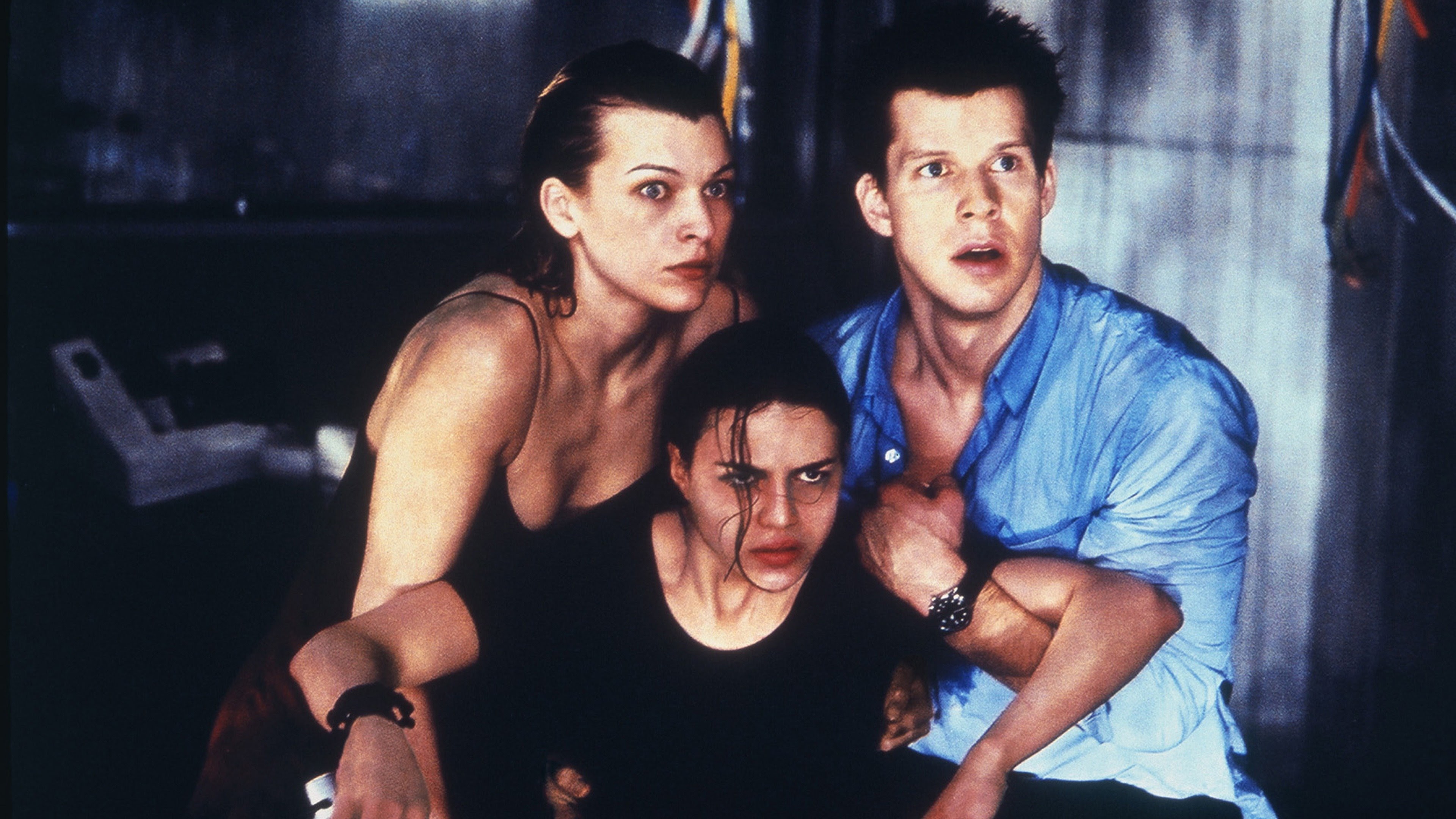
The film introduced us to Alice, played by Milla Jovovich — a brand-new character not found in the original games. That decision puzzled many hardcore fans, but it worked. Jovovich delivered a compelling physical performance and gave Alice a strong presence. She starts vulnerable, amnesiac, but slowly becomes the central figure in the fight against Umbrella. That evolution kept us invested across multiple sequels.
Michelle Rodriguez also stood out as Rain, bringing energy and intensity to every scene. Her presence balanced the story with raw emotion and tough decisions, helping ground the movie even when the sci-fi aspects got wild.
Innovations and Legacy
What made Resident Evil stand out was its pivot toward action rather than pure horror. Instead of sticking closely to the survival roots of the games, the film leaned into dystopian science fiction — with killer AIs, shady experiments, and moral collapse. The Red Queen, with her cold robotic voice, quickly became an iconic antagonist. “You’re all going to die down here” is still unforgettable.
Despite a relatively modest budget, the film delivered solid action scenes and memorable effects. The laser hallway trap became legendary — a moment that showed this movie wasn’t afraid to be visually bold and tense at once. That blend of atmosphere and action was rare for game adaptations at the time.
Of course, critics were divided. Many didn’t appreciate the creative liberties taken with the source material. But Resident Evil found its audience. It became a box office success and gave birth to a franchise with six main installments — proof that the experiment worked, at least for the fans.
How Do We See It Today?
Two decades later, Resident Evil is remembered with a mix of nostalgia and respect. Hardcore fans may still criticize the deviation from the games, but many recognize that the first film managed to do something unique. It opened the door to a cinematic universe that welcomed millions of new fans — and that can’t be ignored.
Today, the film is seen as a cultural relic of early 2000s cinema — with its distinctive tone, visual style, and industrial soundtrack. Director Paul W. S. Anderson gave it a fingerprint that’s instantly recognizable. And even those who didn’t follow the rest of the franchise often look back fondly at how it all started.
Did you enjoy the film even though it wasn’t faithful to the games?
MARKED AS: Movie
COMMENTS
No comments yet.