Alien Earth Review: Great New Creatures, Strong Horror, and a Strange “Xenopet” Problem
Bringing Alien to Earth Was a Risk Worth Taking
Alien: Earth had a difficult challenge from the beginning. The Alien franchise has spent decades building its identity around isolation, industrial spaces, corporate greed, and the fear of being trapped with a creature designed to kill. Bringing that horror to Earth could easily have made the Xenomorph feel smaller or less mysterious.
Surprisingly, the series often avoids that problem.
The world of Alien: Earth still feels recognizably connected to the franchise. Corporations control enormous parts of society, technology has advanced faster than human morality, and every scientific breakthrough seems to exist mainly because someone powerful wants to monetize it. The setting is larger than the corridors of a spaceship, but the story preserves the same idea that human ambition is usually more dangerous than the creatures themselves.
I particularly liked the way the series expanded the universe without relying only on the Xenomorph. Instead of treating one familiar monster as the only form of alien life worth exploring, it introduced an entire collection of organisms brought to Earth aboard the USCSS Maginot.
That choice immediately made the universe feel larger. The Xenomorph remained important, but it was no longer presented as the only strange or dangerous thing waiting beyond human space.
The Eye Midge Was One of the Best New Ideas
The creature I found most interesting was the alien shaped like an eye, officially referred to as the Eye Midge and also known as T. ocellus or Species 64.
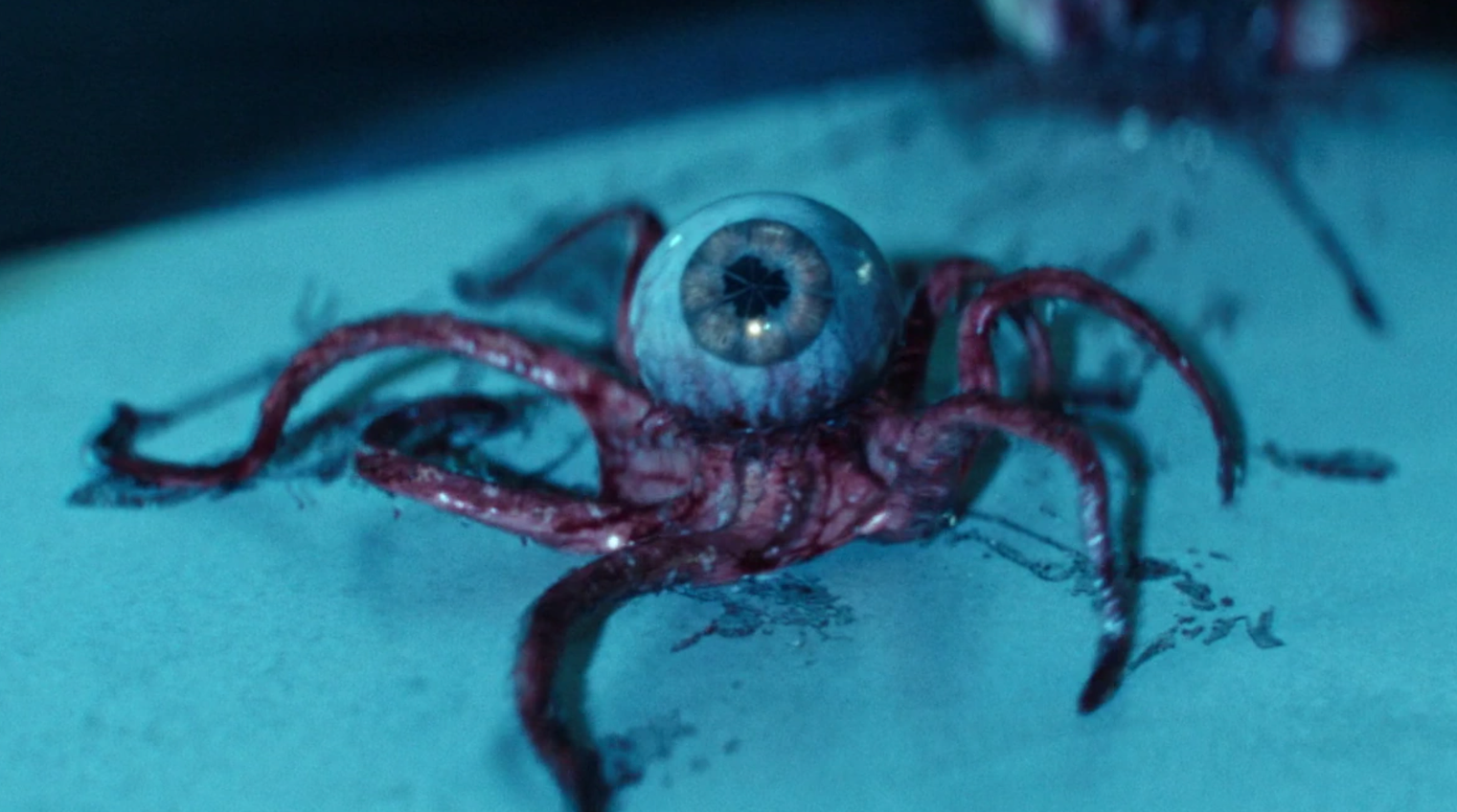
Its design is disturbing because it is simple enough to understand immediately. It removes an organism’s eye, takes its place, and uses the body as a host. But what makes it truly unsettling is not only the physical transformation. The creature appears intelligent, observant, and capable of making strategic decisions.
It does not behave like an animal attacking whatever happens to be nearby. It watches, learns, manipulates, and seems to understand that controlling another body may be more useful than destroying it.
That creates a different kind of fear from the Xenomorph. A Xenomorph entering a room usually creates an immediate physical threat. The Eye Midge creates doubt. Once it takes control of a host, the audience has to wonder how much of that creature’s behavior is instinctive and how much is calculated.
The visual image of an apparently familiar animal or person moving under the control of that enormous eye is exactly the kind of disturbing biological concept the franchise should continue exploring. It feels alien without being complicated merely for the sake of novelty.
For me, this was one of the strongest additions to the mythology. Alien has always been fascinated by bodies being invaded, transformed, or used by another organism. The Eye Midge takes that familiar theme and approaches it from a new direction.
The Xenomorph Looked Fantastic, Until It Did Not
The representation of the Xenomorph was more inconsistent.
In several scenes, the creature looked excellent. The lighting, sound design, posture, and slow movements restored some of the presence that made the original film so effective. When the series allowed the Xenomorph to remain partly obscured, it appeared large, intelligent, and dangerous.
The best moments understood that the creature does not need to run constantly or attack everyone immediately. Sometimes it is more frightening when it pauses, studies the environment, and seems to decide what to do next.
There were also sequences where its physicality worked extremely well. The Xenomorph moved like an animal adapted to hunting in different spaces, using its body, tail, speed, and ability to climb in ways that felt functional rather than theatrical.
However, not every appearance was equally convincing.
Some scenes showed too much of the creature in lighting or movement that exposed the effects. At times, the Xenomorph looked less like a physical organism sharing the environment with the actors and more like a digital character inserted into the scene.
That inconsistency matters because the Xenomorph depends heavily on presence. It needs to feel wet, heavy, unpredictable, and physically connected to its surroundings. When that illusion works, Alien: Earth can be genuinely frightening. When it does not, the creature loses some of its mystery and becomes a visual effect performing the expected movements.
Fortunately, I thought the stronger scenes outnumbered the weaker ones. The production clearly understood the importance of the Xenomorph’s silhouette and behavior, even if the execution occasionally varied.
Episode Five Showed What the Series Could Have Been
One of the clearest demonstrations of the series’ potential came when the story returned to the USCSS Maginot and explored what happened aboard the vessel before it crashed on Earth.
That section felt like a smaller Alien film placed inside the larger series. The confined ship, the growing suspicion, the corporate mission, the alien specimens, and the feeling that something had already gone terribly wrong created the kind of pressure associated with the strongest entries in the franchise.
The episode worked because it had a direct narrative engine. The audience understood the immediate problem, the characters had limited ways to escape, and each new revelation increased the danger.
It also benefited from mystery. The disaster was not caused only by alien creatures escaping containment. Human decisions, sabotage, corporate objectives, and personal motivations all contributed to the collapse.
For me, that episode demonstrated that Alien: Earth could create strong tension when it narrowed its focus. It had atmosphere, violence, suspense, and the familiar horror of watching intelligent people gradually lose control of a situation they believed they could manage.
The broader story had interesting ideas, but it did not always maintain that same focus.
I Expected More From the Main Narrative
My biggest disappointment was not the creatures or the production. It was the narrative.
Alien: Earth introduces several promising ideas involving corporate power, artificial bodies, human consciousness, immortality, children living inside adult synthetic forms, and the arrival of dangerous life on Earth. That is an enormous amount of material, and not all of it receives the development it deserves.
The hybrids are a fascinating concept. They look like adults, but their minds and emotional development still belong to children. That creates questions about identity, consent, control, exploitation, and what it actually means to remain human after the body has been replaced.
The problem is that the series sometimes becomes so interested in its ideas that the immediate story loses momentum. Characters move through long philosophical or corporate conflicts while the alien threat remains contained, observed, or postponed.
I do not think Alien needs to become constant action. The first film is proof that patient storytelling can create much stronger horror than nonstop attacks. But slow pacing needs tension beneath it. The audience should feel that every conversation, experiment, or decision is pushing the situation closer to disaster.
In Alien: Earth, some episodes create that feeling very well. Others seem to pause the central danger while the series explores another concept.
The result is ambitious but uneven. I remained interested because the world and creatures were compelling, yet I often felt that the narrative should have been more urgent and better connected.
Wendy Is an Interesting Character With a Difficult Role
Wendy is central to the series because she exists between several categories. She has the memories and emotional history of a human child, but she lives inside a powerful synthetic body. She is stronger than ordinary humans, difficult to control, and increasingly capable of communicating with something no one else understands.
Sydney Chandler gives Wendy a mixture of innocence, intelligence, confidence, and emotional instability that makes her interesting to watch. Wendy is not simply a robot who believes she is human. She is a child trying to understand what humanity means after being told that her original body was temporary.
Her relationship with her brother gives the series an emotional center. She remembers being his sister, while he has to process that the person in front of him is both familiar and fundamentally different. That conflict could become even more powerful as Wendy moves further away from normal human experience.
Her connection with the Xenomorph also begins as an intriguing development. The possibility that she can hear or understand the creature opens several questions. Is the Xenomorph communicating through sound, instinct, or something more complex? Does Wendy understand it because her synthetic body processes information differently? Is she controlling it, negotiating with it, or only believing that she has control?
Those questions have real potential.
The problem is how the relationship begins to feel emotionally.
The “Xenopet” Direction Weakened the Fear
“Xenopet” is not an official term used by the series, but it perfectly describes the feeling that made me less enthusiastic about Wendy’s connection with the creature.
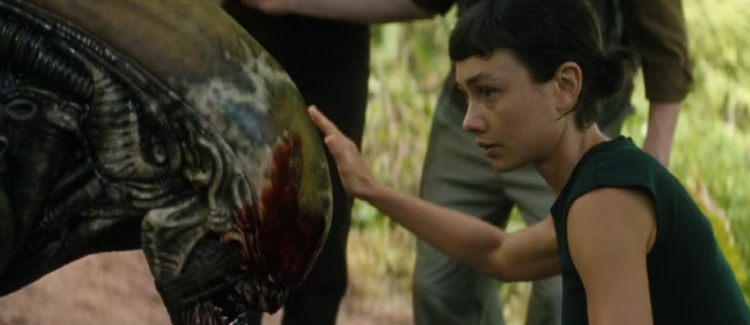
The relationship sometimes moves away from dangerous communication and toward something resembling a child bonding with a strange pet. Wendy appears fascinated by the Xenomorph, speaks to it, and increasingly treats it as something that can belong to her or follow her commands.
That direction weakens one of the most important qualities of the creature.
The Xenomorph should never feel completely domesticated.
It can be studied, trapped, redirected, or temporarily manipulated, but the audience should always sense that control is fragile. This is not a dog learning to trust a new owner. It is a predatory organism whose behavior, intelligence, and biological purpose remain fundamentally alien.
A connection between Wendy and the Xenomorph could work if it remained disturbing. Perhaps Wendy believes she understands it because both of them are treated as experiments. Perhaps she projects her own loneliness onto the creature. Perhaps the Xenomorph recognizes her as useful rather than friendly.
That would create tension because the emotional meaning of the relationship would exist mainly in Wendy’s interpretation. She might see companionship while the creature sees opportunity.
Instead, some moments risk making the Xenomorph feel almost cute or loyal. That is where the “xenopet” idea becomes a problem for me.
Alien can evolve, and the franchise should experiment with new relationships and forms of communication. But turning its central monster into something too easily controlled could reduce the fear that has sustained it for decades.
The Creature Should Be Using Wendy Too
A stronger version of this idea would make the relationship more ambiguous.
Wendy may think she is teaching or controlling the Xenomorph, but the creature should also be learning from her. It could recognize that she can open doors, disable security systems, protect its offspring, or free other specimens.
The apparent bond could therefore be a form of mutual manipulation. Wendy sees herself as someone finally capable of communicating with another misunderstood lifeform. The Xenomorph sees Wendy as a highly capable organism that can help it survive and reproduce.
That would preserve the central horror.
The relationship could still be emotional for Wendy without becoming safe for the audience. Every time she approached the creature, we would wonder whether it truly recognized her or was simply waiting for the most useful moment to attack.
Alien stories are strongest when human beings misunderstand what they are dealing with. Scientists believe they can contain it. Corporations believe they can monetize it. Soldiers believe they can kill it. Wendy may become another version of the same mistake by believing she can befriend it.
That would be far more interesting than simply giving her a loyal alien companion.
The Human and Corporate Monsters Still Work
One thing Alien: Earth understands very well is that the Xenomorph is not the only monster in the franchise.
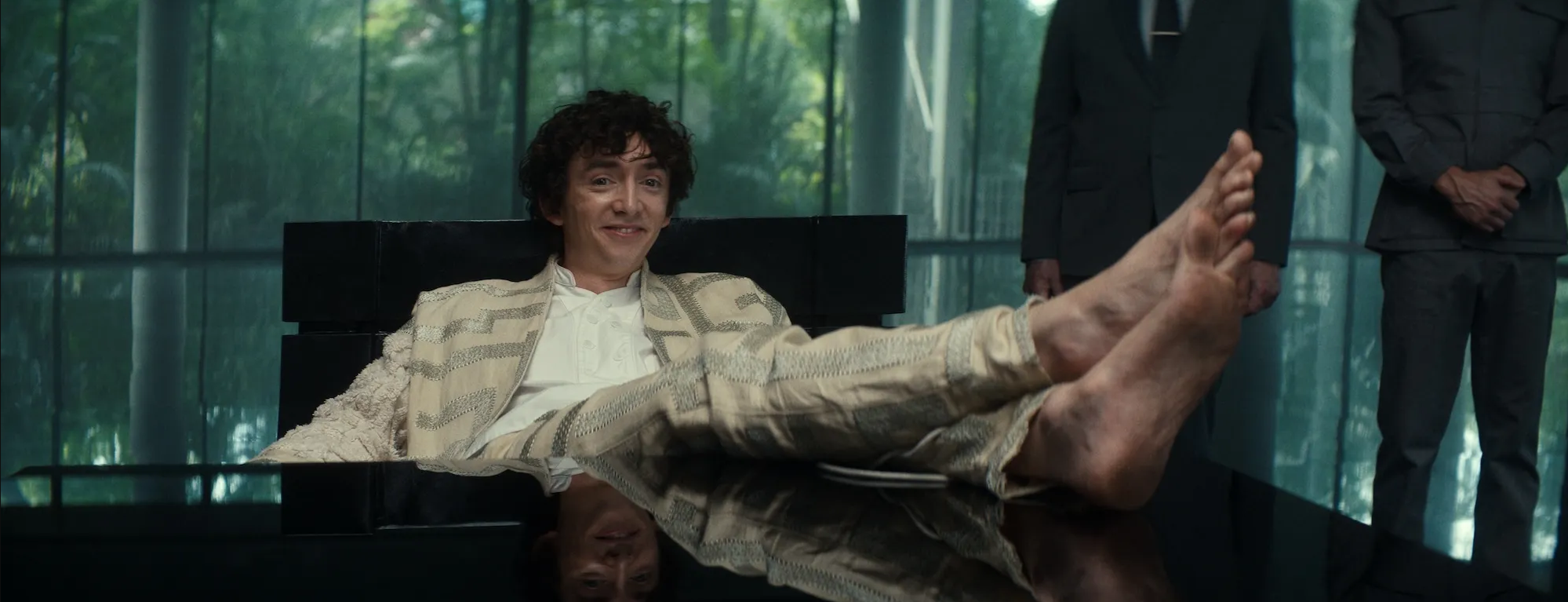
Boy Kavalier treats living beings, human consciousness, synthetic bodies, and alien organisms as pieces of an experiment. His confidence comes from the belief that intelligence gives him the right to control everything around him.
That arrogance fits naturally into the Alien universe. The corporations have always believed that dangerous life can be captured, studied, and converted into profit. The fact that this plan repeatedly ends in catastrophe never seems to change the next executive’s confidence.
The series expands that theme by creating a world controlled by competing corporations rather than traditional governments. Human bodies, memories, weapons, and entire cities become assets owned by organizations with almost unlimited power.
This background gives the story relevance beyond the monsters. Alien: Earth is also about technological billionaires who treat the future as their personal laboratory and assume that every ethical limit exists only because less intelligent people created it.
That satire can be blunt, but it works. The series is at its most effective when the alien organisms and the corporations reflect one another. Both consume, adapt, and use other bodies for their own purposes. The difference is that the creatures do it by instinct, while the humans build an ideology around it.
The New Creatures Expanded the Franchise Successfully
Even with my narrative criticisms, I think the decision to introduce several alien organisms was successful.
The franchise needed to show that space contains more than variations of the same Xenomorph. The Maginot’s specimens suggest a wider ecosystem of life, with each organism having different methods of survival, reproduction, and control.
The Eye Midge was the standout, but the other creatures also contributed to the sense that humanity has begun collecting things it does not understand. That idea carries enormous potential for future seasons.
The danger is that the series could become a weekly monster showcase, where each creature is introduced, causes a problem, and is eventually contained. Alien: Earth should resist that structure.
The organisms are more interesting when they interact with one another, with the environment, and with the ambitions of the human characters. Their presence should reshape the world rather than simply provide individual horror sequences.
The first season establishes a laboratory filled with possible disasters. The second season now needs to turn those possibilities into a more focused story.
Season Two Has the Opportunity to Improve Everything
Alien: Earth is moving forward with a second season, which is good news because the first season feels more like the opening stage of a larger story than a complete narrative.
The new season has an opportunity to preserve what worked while correcting the imbalance.
The Eye Midge should continue developing as an intelligent and manipulative threat. The Xenomorph should become less predictable, especially if Wendy believes she controls it. The corporate conflict should have more direct consequences for ordinary people beyond Neverland. The hybrids need to confront what their artificial bodies and child identities mean outside the isolated environment created for them.
Most importantly, the story needs stronger forward momentum.
The first season introduced the creatures, corporations, hybrids, and central conflicts. The second should not spend another full season arranging pieces. It should allow those pieces to collide.
Wendy’s “xenopet” relationship could become one of the strongest elements if the series reveals that she has misunderstood the creature. Her confidence could lead to disaster, forcing her to confront the difference between empathy and projection.
The Xenomorph is not evil in a human sense, but that does not make it a friend.
A Strong Series That Has Not Reached Its Full Potential
Overall, I liked Alien: Earth quite a lot.
I appreciated the new creatures, especially the Eye Midge. I liked the corporate world, the hybrids, the visual ambition, and many of the Xenomorph scenes. The series was willing to add new ideas instead of simply copying the structure of the original films.
At the same time, I expected more from the narrative. The season introduced fascinating themes but did not always connect them into a consistently tense story. Some episodes were excellent, while others felt more interested in preparation than consequence.
The Wendy and Xenomorph connection is the element that concerns me most. Communication between them could become disturbing and original, but the creature should never be reduced to a “xenopet.” The moment the audience feels that the Xenomorph is loyal, cute, or safely controlled, part of its power disappears.
Even with those problems, the series gave me enough reasons to continue. Alien: Earth may not have reached the full potential of its premise, but it brought creativity back into the franchise and opened doors that a second season can explore more effectively.
I liked the first season.
Now I want the next one to make the monsters frightening again, including the ones who believe they can control them.
Did you enjoy Alien: Earth?
MARKED AS: Tv Show

COMMENTS
Want to join the conversation? Log in to leave a comment.