The Dark Tower (2017): A Tower of Potential, Trapped in the Wrong Format
What if one tower held the fate of every world in existence?
When I first heard about The Dark Tower, I was instantly intrigued. The idea of a mystical structure that connects — and protects — all realities is the kind of high-concept premise that speaks directly to the imagination. It’s bold, mysterious, and rich with possibilities. Stephen King’s sprawling universe, where elements of fantasy, science fiction, horror, and western collide, is unlike anything else in modern storytelling.
So when news came that it would be adapted into a film, I was cautiously optimistic. I didn’t expect a page-by-page retelling — that’s rarely realistic — but I did hope for something that captured the soul and ambition of King’s work. After all, a world-hopping gunslinger chasing a dark sorcerer across collapsing dimensions? That has cinematic gold written all over it.
But then came the 2017 movie.
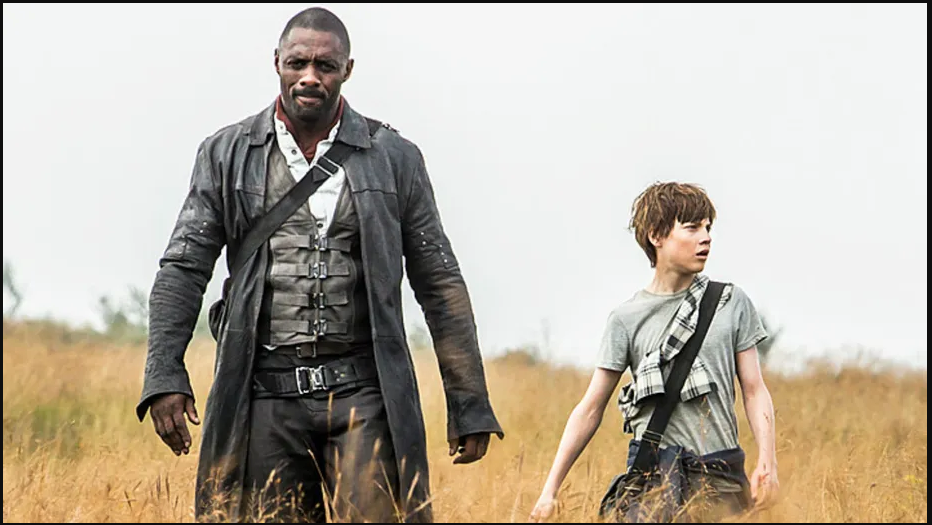
Clocking in at just 95 minutes, The Dark Tower tried to compress decades of complex mythology into a tight, digestible action flick. Idris Elba brought charisma and gravitas to Roland Deschain, and Matthew McConaughey’s Man in Black had a certain eerie charm. But the film never gave them enough room to breathe. What should’ve felt like an epic journey across multiple worlds felt instead like the summary of a longer story we never got to see.
Watching it, I felt a kind of frustration — not because the film was outright bad, but because I could see glimmers of greatness beneath the surface. It was like reading the back cover of a brilliant book without ever opening it. The Tower, the mythos, the stakes — it all deserved more time, more depth, more... respect.
The biggest problem, in my opinion, was the format. The Dark Tower is not a story that fits neatly into a one-off movie. It needs space. Space to explore Roland’s past, the decay of his world, the significance of the Tower, and the haunting pull of Ka. This story isn’t just about a hero and a villain — it’s about the cost of obsession, the nature of good and evil, and the slow unraveling of existence itself. That’s not popcorn fare. That’s long-form storytelling.
Unsurprisingly, the audience wasn’t kind. Reviews were mixed to negative, and many longtime fans of the book series felt alienated by the movie’s simplified plot and lack of emotional weight. As a result, the film didn’t make a strong impact at the box office, and the much-hyped cinematic universe was quietly shelved.
But there’s hope on the horizon.
Mike Flanagan — known for thoughtful, faithful adaptations of King’s work — has confirmed he’s working on a Dark Tower TV series. He envisions five seasons and two films, and has stated it’s the most ambitious project of his life. King himself has given the project his blessing, which speaks volumes. If there’s anyone who can handle the scope, tone, and emotional complexity of this story, it might be Flanagan.
And personally? I’m excited. Deep down, I still believe The Dark Tower can be done justice — but only if it’s given the room to grow. The Tower is not just a plot device; it’s a symbol of everything that holds reality together. And Roland Deschain is not just a protagonist; he’s a tragic figure whose path demands patience and nuance.
The 2017 film tried to capture lightning in a bottle — and dropped the bottle. But maybe now, with a slower, more thoughtful approach, we can finally climb the Tower the right way.
So here’s the question:
Was turning The Dark Tower into a short feature film the right call — or should this story have always been a long-form series?
MARKED AS: Movie
COMMENTS
No comments yet.