The Divergent Series Failed to Become the Next Hunger Games. Does It Really Deserve a Return?
Divergent was not a copy, but Hollywood knew exactly what it was selling
It would be inaccurate to call Veronica Roth’s first novel a copy of The Hunger Games. Divergent was published in 2011, before the first Hunger Games movie reached cinemas, and the factions, simulations and ruined version of Chicago belong to Roth’s own mythology.
The film series, however, cannot be separated from the business strategy surrounding it. By the time Divergent arrived in 2014, Twilight had ended and The Hunger Games had proved that a female-led dystopian adaptation could become a global event. Lionsgate and Summit did not hide Divergent in a small corner of the market. They presented Tris as the next major young-adult heroine and built the production around the expectation of a long-running franchise.
That commercial logic does not make the movie illegitimate. Most studio films are made because someone recognizes an audience. The real problem is that Divergent rarely moves beyond the ingredients that made it easy to market.
Tris lives under an oppressive social system, discovers that she is different, survives a violent initiation, falls in love with a guarded young man and becomes a threat to powerful authorities. None of those ideas is automatically bad, but the film treats familiarity as if it were momentum. It keeps moving from test to revelation without giving its society enough weight to feel like more than an elaborate setup for its protagonist.
The Hunger Games also uses recognizable young-adult conventions, but its central conflict is immediate and disturbing. Children are forced to kill one another for the entertainment and political control of a wealthy ruling class. The spectacle, the inequality and the propaganda all belong to the same idea.
In Divergent, society sorts every person according to one dominant virtue. It is visually clean and easy to explain in a trailer, but the more seriously I consider it, the less convincing it becomes. How does a civilization function when intelligence, honesty, courage, kindness and selflessness are separated into competing social identities? The answer should reveal something uncomfortable about human nature. Instead, the system often feels like a quiz waiting for the heroine to prove that she cannot be categorized.
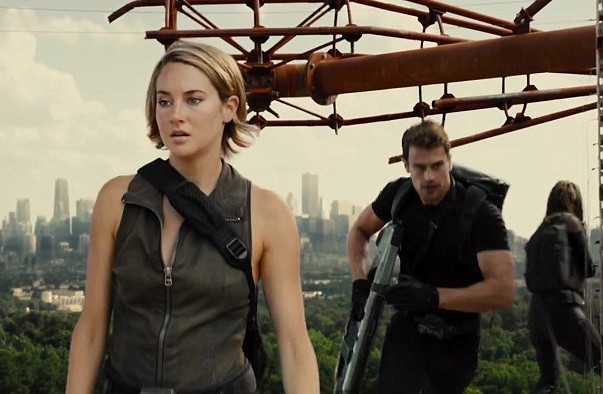
The faction system promised depth that the films never delivered
The first movie is at its best when the factions appear to offer Tris a genuine emotional choice. Remaining with Abnegation means preserving her family and the identity in which she was raised. Choosing Dauntless gives her freedom, but also forces her to become someone capable of surviving brutality. There is a useful coming-of-age story inside that conflict.
Unfortunately, the franchise becomes less interesting as it explains itself. Rather than deepening the political meaning of the factions, the sequels expand the conspiracy, introduce new technology and eventually reveal a larger world outside Chicago. The mystery grows in scale while becoming smaller in imagination.
This is where the comparison with The Hunger Games becomes damaging. Katniss is important because the Capitol turns her into a symbol that different groups try to control. Her value is political, and her choices remain connected to the suffering around her. Tris is important because her mind possesses an unusually valuable combination of traits. The story talks about resisting labels, but it repeatedly makes its heroine special in a very conventional way.
Shailene Woodley gives Tris more vulnerability than the scripts sometimes deserve, and the cast around her includes Theo James, Kate Winslet, Octavia Spencer, Naomi Watts, Zoë Kravitz and Miles Teller. Talent was never the franchise’s main limitation. What it lacked was a reason for this particular dystopia to stay with the audience after the familiar training sequences, romances and rebellions were over.
That is why the films still feel like “more of the same” to me. They contain themes, but they do not press hard enough on those themes to develop a personality of their own.
The box office decline was worse than the total numbers suggest
The first Divergent was commercially successful. It cost a reported $85 million and earned approximately $289 million worldwide. Insurgent raised the production budget to around $110 million and finished close to $297 million globally. The sequel did not create the explosive growth Lionsgate would have wanted, but the franchise still looked sustainable.
Then Allegiant exposed how fragile that audience had become.
| Film | Reported production budget | Worldwide box office | US and Canada |
|---|---|---|---|
| Divergent | $85 million | $288.9 million | $150.9 million |
| Insurgent | about $110 million | $297 million | $130.2 million |
| Allegiant | $110–142 million | $179.2 million | $66.2 million |
The worldwide and domestic totals are documented by Box Office Mojo. Estimates for Allegiant vary: The Numbers reports a $110 million production budget, while FilmLA’s 2016 feature-film study lists $142 million. Either figure leads to the same conclusion. A worldwide gross of roughly $179 million was not enough for an effects-heavy studio film once cinema revenue shares, marketing and distribution were considered.
The domestic decline is even more revealing. The first movie earned nearly $151 million in the United States and Canada. The third did not reach half of that. Its opening weekend fell to about $29 million after the first two films had opened above $52 million.
This was not simply a disappointing chapter that happened to interrupt a successful series. The franchise had been losing its ability to make audiences care, and the third film arrived at the exact moment when a fourth expensive production needed to be justified.
Splitting Allegiant into two movies turned weakness into a liability
Lionsgate originally divided Roth’s final novel into Allegiant and Ascendant. The strategy had already worked for Harry Potter, Twilight and, financially at least, The Hunger Games. For Divergent, it looked less like a creative requirement and more like a studio applying a profitable template one more time.
The decision created an obvious risk. Allegiant had to function as a major theatrical release while deliberately withholding the conclusion. If audiences loved the world, that delay could build anticipation. If their interest was already fading, the movie would feel like an expensive bridge to an ending they were no longer eager to see.
Even Roth later questioned the logic. In 2023, she said that dividing final books was fashionable at the time and argued that a novel needs to be especially long for the split to make sense. She also explained that the movies had moved so far from her books that the unfinished film series felt relatively complete to her. Her comments, reported by Entertainment Weekly, make the cancellation sound less like the destruction of a carefully preserved ending and more like the final consequence of an adaptation that had already changed direction.
The source material came with another complication. The ending of the Allegiant novel deeply divided readers because of the fate Roth chose for Tris. The reaction went far beyond reasonable criticism. Roth later wrote about the anger and threats that followed publication, while continuing to defend the character arc that led to her decision. Her own account in Salon shows how emotionally invested the readership was, but also how difficult it would have been for a film already struggling with its audience to deliver a satisfying conclusion.
None of this means the studio should have abandoned the story without warning. It does explain why Ascendant had become a dangerous investment before cameras ever started rolling.
Ascendant was not saved by television
After Allegiant underperformed, Lionsgate dropped the plan for a theatrical finale and tried to reshape Ascendant as a television movie that could introduce a spin-off series. On paper, reducing the scale may have looked like a practical way to finish Tris’s story without risking another blockbuster budget.
In reality, the proposal changed the promise made to both the audience and the actors. Ascendant was no longer simply the final chapter. It was being asked to close a declining movie franchise while launching a television property built around new characters.
The cast did not respond as if this were a natural continuation. Shailene Woodley publicly said that she had not signed up for a television show, and Miles Teller also expressed uncertainty after learning about the change. Vanity Fair documented their reactions, while the original Variety report could not confirm that the principal actors would return. Without Woodley, any supposed conclusion to Tris’s story immediately lost its center.
Starz later developed a television version, but the project never reached production and was no longer moving forward by 2018, according to a later account of the cancelled finale. The cancellation is often described as a single response to bad box office, yet the failure was broader than one number. The franchise lost its theatrical format, the confidence of its leading actors and the ability to promise fans a genuine ending.
By that stage, producing Ascendant merely because a franchise should not stop on a cliffhanger would have been an act of obligation, not creative confidence.
The Sixth Faction can return to Divergent without proving the films deserve a reboot
There is one important new development. In April 2026, Veronica Roth announced The Sixth Faction, the beginning of a two-book return to the Divergent universe. Rather than continuing after Allegiant, the new story reimagines Tris’s life through a different choice at the faction ceremony. Deadline reported that the first novel is scheduled for October 2026.
That concept makes more sense to me than simply reviving the abandoned film series. Roth is not pretending that the old story still needs one more conventional installment. She is returning with a structural “what if?” that can challenge the decision around which the original identity of Tris was built.
It may work, or it may confirm that the franchise still has little to say beyond reorganizing its factions. At least there is a creative question behind it.
A screen reboot would need the same level of purpose. Nostalgia is not enough, and neither is the unfinished status of Ascendant. A new adaptation would have to make the faction system socially believable, give the conflict greater political weight and show why Divergent matters in a culture now filled with stories about authoritarianism, identity and resistance.
As of July 2026, Lionsgate still presents The Divergent Series as a completed feature-film trilogy in its official franchise catalogue, and no new screen adaptation has been publicly announced. The new books may eventually change that. If they do, Hollywood should resist the easiest option, which would be selling the return itself as the reason to watch.
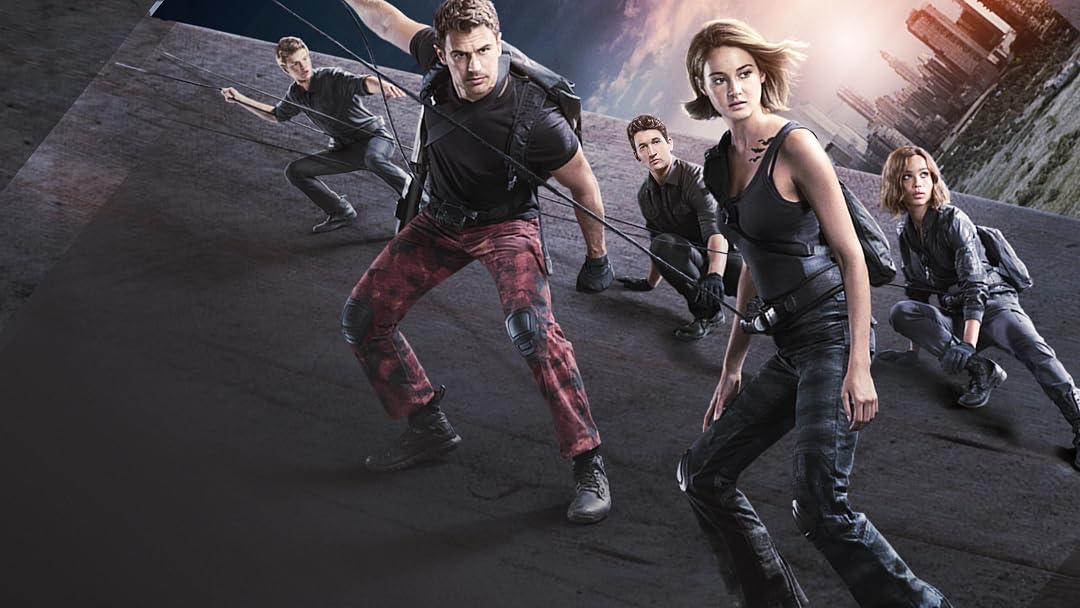
Divergent does not deserve another chance just because it never received an ending
I understand why fans still want Ascendant. They invested in three movies and were denied the conclusion that the studio had advertised. That frustration is legitimate.
But an unfinished franchise is not automatically an unfinished artistic statement. Divergent began as a well-timed attempt to capture the same audience that had embraced The Hunger Games, and it never escaped the feeling of being assembled from a familiar young-adult formula. Its commercial decline did not destroy a growing phenomenon. It revealed that the phenomenon had never become as strong as the studio believed.
The most interesting future for this universe may now be The Sixth Faction, precisely because it is not trying to drag the old film series across the finish line. If the book gives Tris’s world a new perspective, then perhaps a genuinely different adaptation could be worth discussing one day.
Until that happens, I do not think Divergent deserves a reboot. It needs a reason to exist before it needs another release date.
Did you enjoy The Divergent Series, and do you think it deserves another chance?
MARKED AS: Movie
COMMENTS
Want to join the conversation? Log in to leave a comment.