The Lost Wild Could Be the Jurassic Park Game We Have Been Waiting For
A Dinosaur Game That Finally Understands Fear
For years, Jurassic Park has been one of the strongest fantasy playgrounds in entertainment. Dinosaurs, abandoned facilities, jungle environments, corporate secrets, survival tension, and the terrifying idea that nature cannot be controlled. That formula should have produced several unforgettable horror games by now.
And yet, somehow, it never really happened at the level many fans imagined.
That is why The Lost Wild feels so exciting. It does not look like a power fantasy where the player becomes the ultimate predator. It looks like the opposite. You are small, vulnerable, exposed, and constantly aware that something larger, faster, and smarter may already be watching you.
That is the exact feeling a dinosaur survival game should create.
The best Jurassic Park moments were never only about dinosaurs attacking. They were about tension. The glass of water shaking before the T. rex arrives. The raptors learning how to open doors. The silence before something moves in the trees. That slow, primal anxiety is what makes dinosaurs scary. The Lost Wild seems to be chasing that feeling, and that is why it immediately caught my attention.
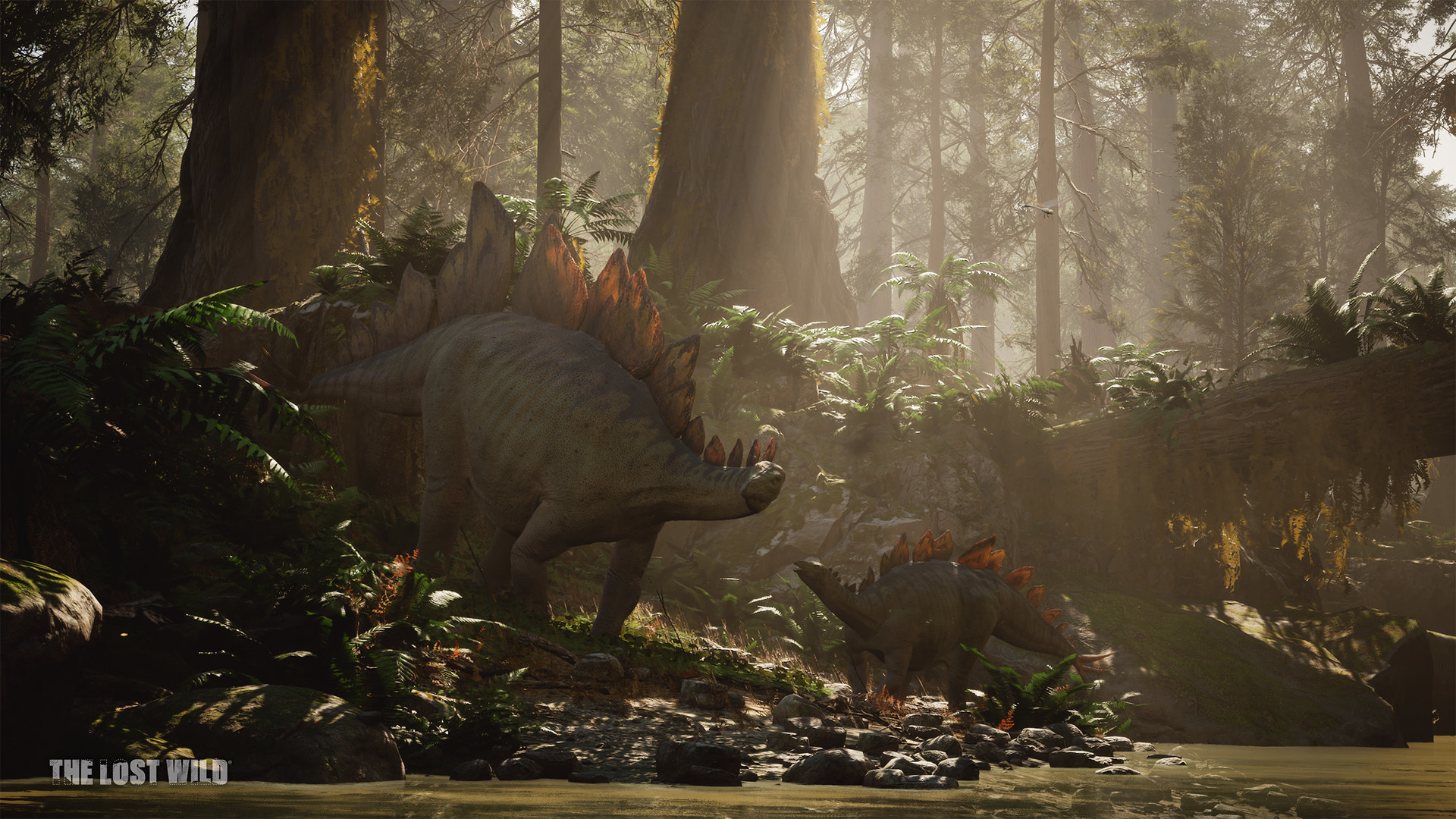
Not Just Jurassic Park With Another Name
Of course, The Lost Wild is not officially a Jurassic Park game, and that may actually be one of its biggest advantages.
Without being tied to a massive franchise, it can build its own identity. It can be darker, stranger, quieter, and more focused on survival. It does not need to constantly reference famous scenes, legacy characters, or familiar locations. It can create its own world and let the player discover the mystery through atmosphere and exploration.
That freedom matters.
A licensed Jurassic Park game often has to carry the weight of nostalgia. It needs to respect the movies, the dinosaurs, the branding, and the expectations. The Lost Wild can simply ask a stronger question: what would it actually feel like to be trapped in a place where prehistoric animals are not movie monsters, but living creatures with instincts, territory, curiosity, and intelligence?
That is a much more interesting foundation for horror.
Survival Through Stealth, Not Firepower
The most promising part of The Lost Wild is its focus on evasion and survival instead of direct combat. That single choice changes everything.
If a dinosaur game gives the player too many weapons, the fear disappears. Dinosaurs become targets. Encounters become action sequences. The tension turns into resource management and aiming skill. That can be fun, but it is not the same thing as survival horror.
The Lost Wild seems to understand that fear comes from limitation. You survive by hiding, distracting, reading behavior, using the environment, and making desperate choices under pressure. That makes the dinosaurs feel more powerful because they are not just enemies placed in front of you. They are threats you have to understand.
That is also why the comparison with Alien: Isolation makes sense. The fear in that game came from being hunted by something that felt smarter than the player. You could not simply dominate the creature. You had to respect it, avoid it, and survive its presence. If The Lost Wild can bring even part of that design philosophy into a dinosaur setting, it could become something special.
A Linear Story Could Be the Right Choice
One detail that makes me even more interested is the idea that The Lost Wild appears to have a cinematic and mostly linear narrative, while still allowing exploration and backtracking through its world. That sounds like a smart balance.
Not every survival game needs to be fully open world. In fact, a tighter structure might be exactly what this type of game needs. A linear story can control pacing, tension, reveals, and emotional escalation much better than a giant open map filled with repetitive objectives.
A good dinosaur horror game should not feel like a checklist. It should feel like a descent into something increasingly dangerous.
If The Lost Wild uses its structure well, it can create a sense of progression where every new area reveals more about the island, the facilities, the creatures, and whatever went wrong before the player arrived. That kind of design could make the mystery feel stronger. Instead of just wandering through a dinosaur sandbox, the player would be pulled through a survival story with purpose.
For me, that is much more exciting.
Good Graphics Are Important, But Atmosphere Matters More
The visuals already look promising. The environments seem dense, humid, abandoned, and alive. The jungle does not look like a simple background. It looks like a place where danger could be hiding anywhere. That is essential for this kind of game.
But good graphics alone are not enough.
The real challenge will be atmosphere. The Lost Wild needs sound design that makes every distant call matter. It needs foliage that feels unsafe. It needs abandoned structures that suggest a larger mystery. It needs dinosaurs that do not behave like predictable patrol enemies. It needs quiet moments where nothing happens, but the player is still afraid because something could happen.
That is where the game can separate itself from more generic dinosaur experiences.
A good Jurassic Park-inspired game should make the player afraid of movement, noise, and open spaces. It should make you hesitate before stepping into tall grass. It should make a distant sound feel like a warning. It should make survival feel earned.
From what has been shown so far, The Lost Wild seems to understand that mood is not decoration. Mood is the game.
The Game Jurassic Park Never Fully Made
This is why I keep coming back to Jurassic Park.
Jurassic Park gave us one of the greatest survival horror concepts in pop culture, but games based on that universe have rarely captured the full psychological tension of the original idea. Some games focused on management, others on action, others on nostalgia. But the dream of a tense, cinematic, first-person dinosaur survival horror experience has always felt strangely underused.
The Lost Wild could fill that gap.
It has the survival angle. It has the mystery. It has the visual atmosphere. It has dinosaurs that appear to be treated less like monsters and more like dangerous animals. It has the potential for stealth, dread, and environmental storytelling. And most importantly, it seems to understand that the player should not feel powerful all the time.
That is the missing ingredient.
The best dinosaur horror is not about killing dinosaurs. It is about realizing you are not in control.
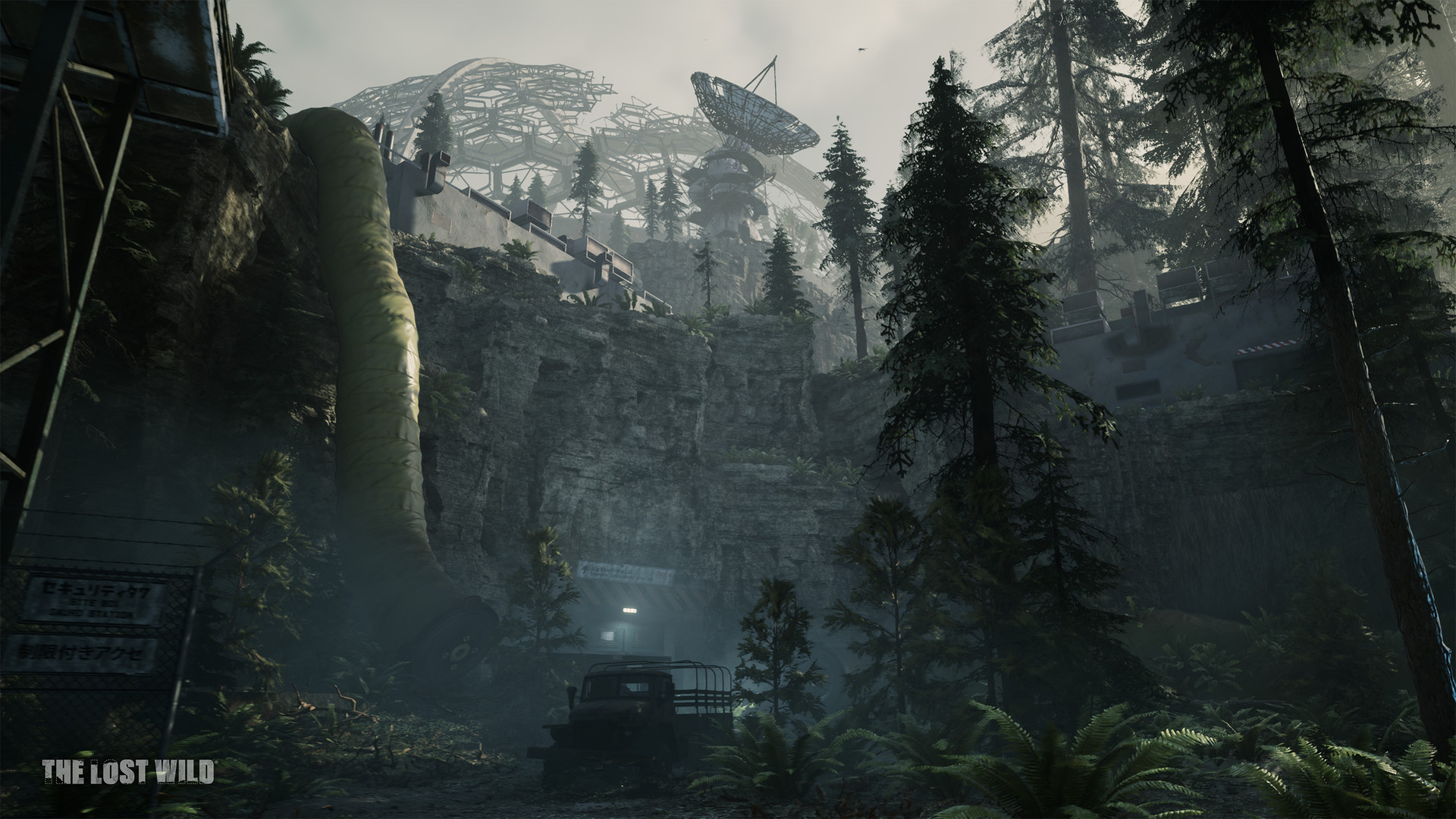
Why This Could Stand Out in 2027
By 2027, the survival horror space will probably be even more crowded. But The Lost Wild has something many games do not: a clear fantasy that players instantly understand.
You are alone in a dangerous prehistoric environment.
The creatures are intelligent.
You cannot rely on brute force.
You must survive, explore, and uncover the truth.
That is simple, strong, and easy to market. But it is also deep enough to become memorable if the execution is right.
The key will be restraint. The game should not overexplain everything. It should not turn every encounter into a scripted chase. It should not overload the player with weapons or systems that weaken the fear. The more grounded and tense it feels, the more powerful it will be.
If The Lost Wild trusts its atmosphere, trusts its dinosaurs, and trusts the player to feel vulnerable, it could become one of the most memorable survival horror games of its generation.
A Promising Future for Dinosaur Horror
I am genuinely excited for The Lost Wild because it feels like it is aiming at the exact experience dinosaur fans have wanted for years. Not just another action game. Not just another survival crafting loop. Not just another open-world map with prehistoric skins.
- A real dinosaur horror experience.
- A game about being hunted.
- A game about hiding, listening, observing, and surviving.
- A game that understands why Jurassic Park was terrifying before it became an action franchise.
Of course, we still need to see more. A great trailer does not guarantee a great game. The final experience will depend on pacing, AI behavior, performance, level design, story execution, and how well the stealth systems actually work. But the foundation is exciting.
If it delivers, The Lost Wild may not just be another dinosaur game.
It could be the Jurassic Park game we always imagined, even without the Jurassic Park name.
MARKED AS: Game
COMMENTS
Want to join the conversation? Log in to leave a comment.